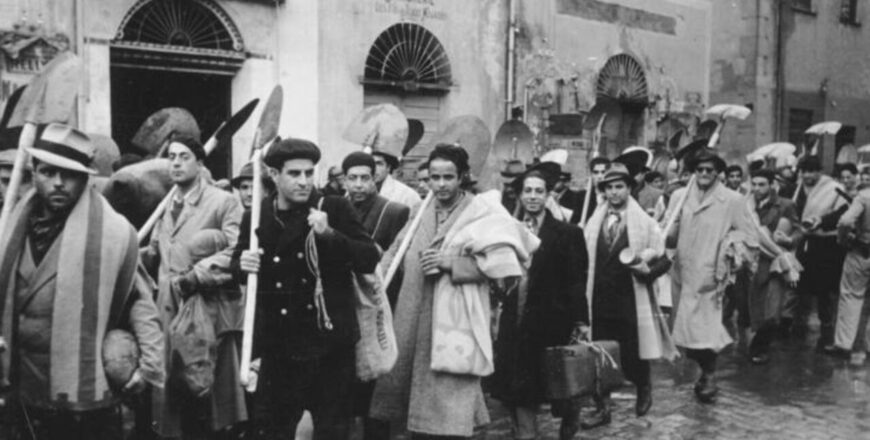
The Jews of Tunisia in the Turmoil of the Second World War (1940–1943)

- Description
- Curriculum
- Reviews
Introduction: This course explores the experience of Tunisia and its Jewish community during the upheavals of the Second World War, from 1940 to 1943. It places this history within the wider context of the Holocaust and the spread of antisemitic policies under Nazi Germany and Vichy France, while paying particular attention to how these policies reached Tunisia and affected people living there. Across four modules, learners will examine the political and social context of the period, the implementation of Vichy’s antisemitic legislation in Tunisia, and the six months of German military occupation from November 1942 to May 1943. The course also looks at the different experiences and choices of people in Tunisia during this period — including forms of protection, resistance, collaboration, and everyday responses — and considers how this part of Tunisia’s history has been remembered, discussed, and understood over time.
Course developed with Dr. Habib Kazdaghli
-
1
 Learning Objectives 1
-
2
1.0 Starting Point: One Life Among Six Million
-
3
1.1 What Was the Holocaust?
.
-
4
1.2 Ideological Foundations: How a Society Comes to Embrace It
-
5
1.3 The Stages of Persecution
-
6
1.4 A Continental Geography
-
7
1.5 An Analytical Framework: Victims, Perpetrators, Bystanders, Rescuers
-
8
1.6 Toward North Africa: An Overlooked Extension
-
9
 1.7 Quiz
-
10
Learning Objectives 2
-
11
2.0 Starting Point: A Community Two Thousand Years in the Making
-
12
2.1 From the French Defeat to the Application of the Racial Laws
-
13
2.2 The Legal Arsenal of Exclusion (1941–1942)
-
14
2.3 A Community Caught Between Two Fires: Intercommunal Tensions
-
15
2.4 The Arrival of Moncef Bey: Goodwill and Powerlessness
-
16
2.5 A Phase of Preparation
-
17
Quiz 2.6
-
18
Learning Objectives 3
-
19
3.0 Starting Point: An Airport, a Worksite, a Name
-
20
3.1 The Military Context: Tunisia as a Battlefield
-
21
3.2 Forced Labor: A Large-Scale System of Requisition
-
22
3.3 Physical and Financial Abuses
-
23
3.4 Deportation: Seventeen Names
-
24
3.5 Keeping a Sense of Proportion: What This Module Says, and Does Not Say
-
25
Quiz 3.6
-
26
Learning Objectives 4
-
27
4.0 Starting Point: A Farm Near Mahdia
-
28
4.1 Moncef Bey During the Occupation: Real but Limited Firmness
-
29
4.2 A Largely Restrained Population, and Acts of Individual Protection
-
30
4.3 Resistance Networks: A Plural Composition
-
31
4.4 The Other Side: Collaboration and Denunciation
-
32
4.5 Memory: The Memorial Section of the Borgel Cemetery
-
33
4.6 A History Still Erased from the National Narrative
-
34
Quiz 4.7